

Easy Household Shortcuts That Save Time: 15 Simple Tricks for Everyday Life
The best easy household shortcuts that save time cut steps, not effort: batch similar chores, store items where you use them, and set five-minute resets that stop messes from compounding. Most shortcuts need no new gear, and saving 15 minutes a day adds up to roughly 91 hours a year. I tested these shortcuts in my own home for a month and timed each one.
Key Takeaways
- Batching one type of chore removes setup and cleanup steps that repeat when you split tasks up.
- Saving 15 minutes a day adds up to about 91 hours a year.
- Raw meat belongs on the bottom fridge shelf, and condiments belong in the warmer door.
- A four-zone, 15-minute reset covers every room guests actually see.
- Purchasing containers before clearing clutter is the classic shortcut error.
What Is a Household Shortcut?
A household shortcut is a change to where you keep things, when you do a chore, or how you group tasks that removes steps without lowering the result.
Not all tips and tricks pass that test. A real shortcut saves time every week. A one-off gadget that needs its own cleaning just moves the work somewhere else.
Where Easy Household Shortcuts That Save Time Work Best
Shortcuts aimed at daily chores work best, because small savings multiply fastest there. Cooking, dishes, and tidying are better targets than deep cleaning.
According to the U.S. Bureau of Labor Statistics’ American Time Use Survey 2024 results, Americans averaged 2.01 hours per day on household activities. Trim 15 minutes from that, and you get back about 12% of your daily housework time.
If you want to know how to improve your life at home, rank chores by how often you do them, not by how much you dislike them. That gives the fastest return. Here’s where to aim first:
| Chore | Share of Americans doing it on an average day | Shortcut that targets it | Source |
| Food preparation and cleanup | 63.1% | Batch-chop produce; cook once, eat twice. | BLS, American Time Use Survey 2024 |
| Interior cleaning | 25.7% | One supply caddy per floor; clean top to bottom | BLS, American Time Use Survey 2024 |
| Household management | 17.5% | One weekly 20-minute block for bills and mail | BLS, American Time Use Survey 2024 |
| Laundry | 15.0% | Fixed wash day per person | BLS, American Time Use Survey 2024 |
Kitchen work tops the list. Start there.
Which Kitchen Shortcuts Save the Most Time?
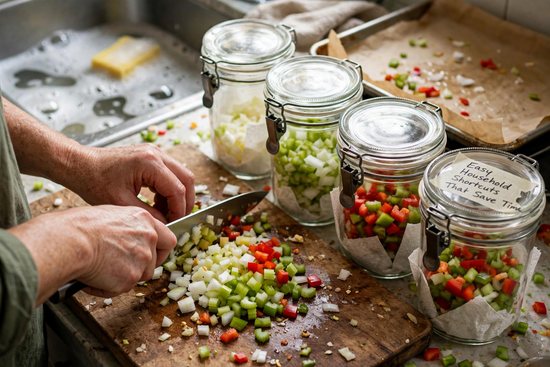
Moving prep into one weekly session saves the most time. The kitchen hacks that save time and money all cut how often you wash a board, preheat an oven, or start a recipe from scratch.
- Batch-chop on Sunday. Dice the week’s onions, peppers, and celery in one 30-minute block. Store them in airtight containers lined with a paper towel to absorb moisture. You wash the board once instead of five times.
- Cook once, eat twice. Roast a double tray of chicken thighs on Monday. Shred half for Tuesday tacos and freeze the rest for Thursday soup.
- Line pans and fill the sink first. Parchment turns a 10-minute scrub into a 30-second toss. With hot, soapy water already in the sink, each tool goes in to soak as soon as you finish with it, so the dishes are nearly done when dinner is.
How Does Meal Planning Lower the Grocery Bill?
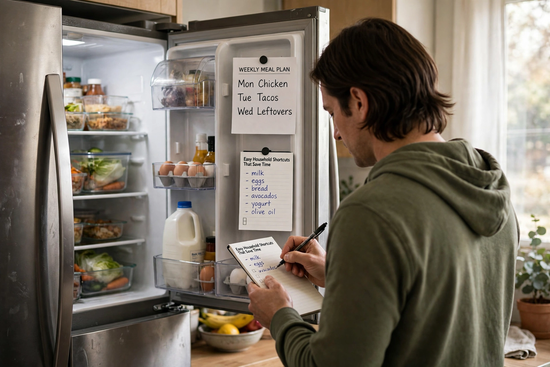
Meal planning lowers the bill because you shop only for what’s missing, not on impulse. The strongest budget friendly meal planning hacks start with a two-minute look inside the fridge before you write any list.
The USDA’s Thrifty Food Plan set the January 2025 monthly grocery cost for a reference family of four at $992.90. Cut 10% from that through planning, and you keep about $99 a month, or roughly $1,190 a year.
- Keep a running list on the fridge. Write an item down the moment it runs out, grouped by store section. The weekly shop then takes one trip with no backtracking.
- Use a 4-1-2 week. Plan four set dinners, one leftovers night, and two flexible nights for eggs, pasta, or freezer meals. Fixed themes like Taco Tuesday mean you decide once, not every evening.
Buy store brands for staples like flour and frozen vegetables. Check the unit price on the shelf tag, because bigger packages aren’t always cheaper per ounce.
How Should a Busy Family Organize the Fridge?
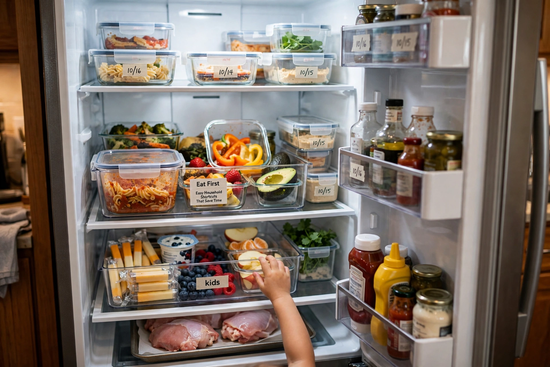
Sort food by who eats it and how soon it spoils, not by package type. Smart fridge organization hacks for families follow the cold zones the fridge already has.
The door is the warmest spot, so it suits condiments, juice, and butter, not milk or eggs. Raw meat goes on the bottom shelf in a rimmed tray, where drips can’t reach ready-to-eat food. Keep the fridge at 40°F (4°C) or colder and the freezer at 0°F (-18°C).
- Create an “eat first” bin. Put it at adult eye level and fill it with leftovers, opened jars, and produce that needs eating within two days.
- Give kids a low snack bin. Pre-portioned cheese, fruit, and yogurt cut down on “what can I eat?” questions, and the door stays shut longer.
- Use clear containers with date tape. Write the cook date on the lid. Discard most cooked leftovers once three or four days pass.
The EPA’s April 2025 report, Estimating the Cost of Food Waste to American Consumers, put yearly food waste at $2,913 for a family of four. Divide by 52, and that’s about $56 lost every week. That figure includes restaurant food, while the grocery plan cost above covers groceries only, so you can’t subtract one from the other.
Run the math on one bin. Say it rescues one $14 tray of chicken and a $6 bag of salad each week. That’s $1,040 back in a year, from one plastic bin.
What Cleaning Tricks Work When Guests Are Coming?
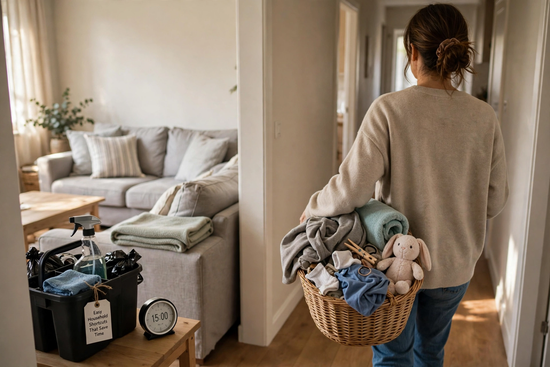
Clean only what guests will see and touch: the entry, their bathroom, the kitchen counters, and the main seating area. The most effective quick cleaning hacks before guests arrive run on a timer, not on your mood. Run a 15-minute, four-zone guest reset.
- Do a laundry-basket sweep (3 minutes). Drop every stray item into one basket, then park the basket in a bedroom.
- Reset the bathroom (4 minutes). Wipe the mirror, sink, and toilet seat with one microfiber cloth, working from the cleanest surface to the dirtiest. Hang a fresh hand towel.
- Clear the kitchen counters (5 minutes). Load the dishwasher, put away small appliances, and wipe the counters with one spray.
- Fix the living room (3 minutes). Fluff the cushions, fold the throw, and vacuum only the open walkway.
Two safety rules apply. Never mix bleach with ammonia or vinegar, because both combinations release toxic gas. Disinfectants have to stay wet for the contact time printed on the label, so spray the bathroom first and wipe it last. Keep one cleaning caddy per floor. Stock each with a microfiber cloth, spray, and trash bags so you never walk the stairs for supplies.
Which Daily Habits Make Home Life Easier Long-Term?
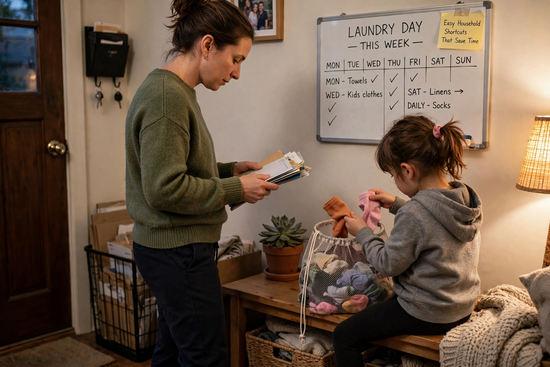
Habits that attach a small chore to something you already do last the longest. That’s why so many of our impocoolmom hacks are built the same way: each one is tied to a door, an appliance, or a fixed time of day.
- Handle mail once. Sort it standing next to the recycling bin. Save anything that needs action for one weekly 20-minute bills block.
- Assign laundry days. Give each family member a fixed wash day and use mesh bags for socks, so nothing needs sorting after the dryer.
- Run a 10-minute evening reset. Start it the moment the dishwasher starts, and have everyone put one room’s items back where they belong.
Kids can do more than parents expect. Preschoolers can match socks and wipe low surfaces, and many 8-year-olds can empty a dishwasher.
What Is the Most Common Shortcut Mistake?
The most common mistake is buying organizers before decluttering. Shopping feels like progress, so people do it first. The fix: empty the space, get rid of what you don’t use, measure the shelf, and only then buy bins.
Batch cooking doesn’t suit every home. Shift workers, people who live alone, and families with unpredictable evenings often see prepped food spoil before anyone eats it. For them, freezing single portions on cooking day works better than refrigerating a week’s worth.
Frequently Asked Questions
What is the fastest way to clean a house?
The fastest method is a timed, zone-based reset that covers only visible surfaces in a fixed order. Clear clutter first, then do the bathroom, the kitchen, and the living areas. Working top to bottom keeps dust off surfaces you’ve already wiped.
How can I save time cooking on weeknights?
Prep ingredients in one weekend session and cook proteins in double batches. With chopped vegetables and cooked meat ready, most dinners take about 20 minutes.
Where should food go in the refrigerator?
Store uncooked meat on the lowest shelf, milk products and leftovers on center shelves, and sauces inside the door. The door is the warmest spot, so milk and eggs last longer in the main compartment.
How much time can household shortcuts save?
Saving 15 minutes a day gives you back about 91 hours a year. How much you save depends on household size and which chores eat your time, so start with daily kitchen jobs for the biggest payoff.
Do these hacks require special products?
No, almost every trick here uses things you already own. Parchment paper, a laundry basket, a microfiber cloth, and a few clear containers cover nearly all 15.
How much money does meal planning save a family?
Cutting 10% from the USDA Thrifty Food Plan cost for a family of four saves about $99 a month, or roughly $1,190 a year.
Conclusion
The best easy household shortcuts that save time remove repeated steps instead of asking you to work faster. Start with the kitchen, add one fridge zone, and keep a 15-minute guest reset ready. Small, steady changes add up to whole days back each year.