
Easy Storage Hacks for Small Homes: Smart Ideas for Every Room
Easy storage hacks for small homes work by adding vertical space before floor space and matching bin purchases to real use. One formula and one test prevent most clutter. This guide covers kitchen, laundry, closet, and bedroom fixes sized to how small households actually live, not generic decluttering advice repeated across most home blogs.
Key Takeaways
- Vertical storage under a home’s existing ceiling height can more than double usable storage volume in the same floor footprint.
- Small-space households tend to own more bins than they use, which wastes both money and space.
- Kitchen and laundry storage problems are usually layout problems, not clutter problems.
- New US single-family homes have gotten smaller in recent years, which makes these fixes more relevant, not less.
- A simple two-question test before buying any container prevents most repeat clutter.
What Are Easy Storage Hacks for Small Homes?
What Is a Storage Hack?
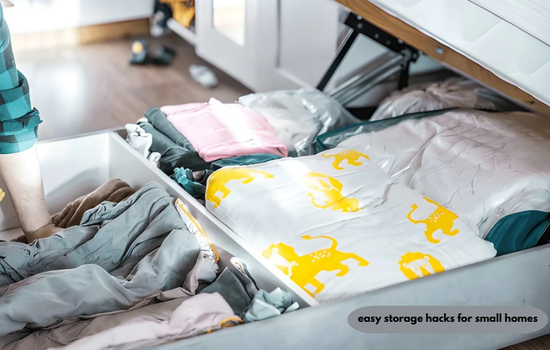
A storage hack is a low-cost, low-effort adjustment to furniture, shelving, or containers that increases usable space without construction or renovation. It relies on existing walls, doors, and vertical space rather than adding square footage. The term covers anything from door-mounted racks to stackable bins with labels.
Why Small-Home Storage Fails in the First Place?
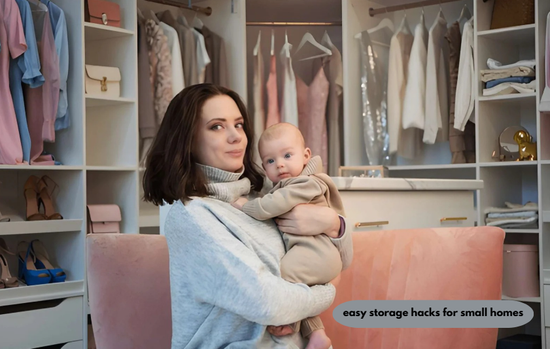
Storage systems in small homes usually fail because containers get purchased before the space is measured, not because the household owns too much. A bin bought without checking shelf height or door clearance often sits empty or gets shoved into a closet, creating clutter instead of solving it. Measure first, then buy—matching the container to the actual space solves more clutter than any single product and can be one practical part of how to improve your life through less daily upkeep.
Kitchen Storage Fixes for Small Homes
How Do You Maximize Cabinet Space in a Small Kitchen?
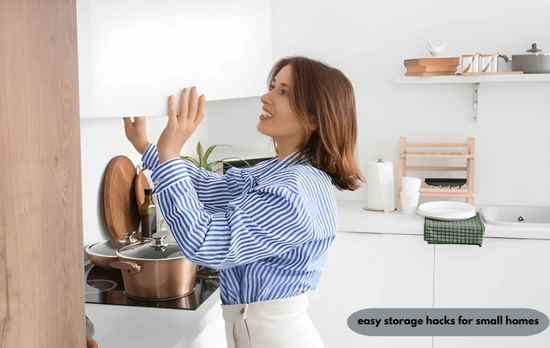
Small kitchens gain the most usable space from stackable risers and vertical dividers, since most cabinets waste 30 to 40 percent of their height on empty air above plates and pans. A two-tier riser turns one shelf into two without removing anything. Vertical dividers next to the stove hold baking sheets and cutting boards upright instead of stacked flat. These fixes count among the kitchen hacks that save time and money because they cut the minutes spent digging through cabinets for one item, which adds up over a year of daily cooking.
Where Should Small Appliances Go in a Tight Kitchen?
Small appliances used less than twice a week belong on a shelf outside the main work zone, not on the counter. Counter space in a small kitchen functions as prep space first and storage space second. An appliance used daily, like a coffee maker, stays on the counter; everything else moves to a pantry shelf or a rolling cart tucked beside the refrigerator.
Laundry Room and Closet Fixes for Tight Spaces
What Storage Works Best in a Small Laundry Room?
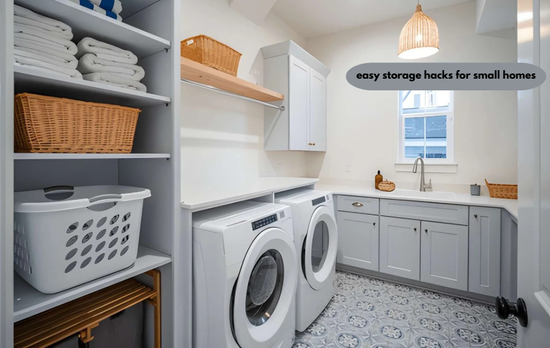
Wall-mounted drying racks and over-the-door hampers solve most small laundry room problems because they use vertical wall space that stays empty in almost every layout. A fold-down rack mounted above the machines adds air-drying space without a permanent footprint. A slim rolling cart between the washer and dryer holds detergent and stain removers within reach. These are laundry hacks that actually work because they target the two real constraints in a small laundry room: wall space and machine gaps, not floor space.
How Do You Organize a Small Closet Without Renovating?
A small closet gains the most capacity from a second closet rod installed below the first one, which works for any closet with more than six feet of hanging clearance. Doubling the rod height fits short items like shirts and folded pants on the lower rod while dresses and coats stay on top. Shoe racks that hang on the closet door reclaim floor space that would otherwise hold a shoe pile.
The Vertical Storage Math for Bedrooms and Living Rooms
How Much More Storage Does Vertical Shelving Actually Add?
A closet footprint of 3 feet by 1.5 feet holds 13.5 cubic feet of storage using floor-level bins stacked to 3 feet, compared to 31.5 cubic feet when shelving runs to a 7-foot reachable height—a 133 percent increase in the same floor space.
- This calculation uses standard floor-to-reachable-shelf measurements, not a generic “go vertical” tip repeated across most organizing articles.
- The math holds for any small space: multiply the floor footprint by the usable height, and compare floor-level storage against full-height storage in the same square footage.
- This life guide approach to storage treats square footage as fixed and height as the real variable worth optimizing.
New-construction data backs up why this math matters more than it used to. The median size of new single-family homes in the US dropped to 2,150 square feet in 2024, the lowest level in 15 years, down from 2,200 square feet in 2023 after holding at 2,300 square feet from 2019 through 2022, according to the National Association of Home Builders.
- That figure describes new-construction medians nationwide, not any single household’s square footage—a small apartment or starter home built decades ago can sit well below or above that number.
- The trend still points the same direction: less new floor space makes vertical storage math more relevant for more households each year, not fewer.
Quick Storage Systems for Busy Moms
What Storage System Takes the Least Daily Maintenance?
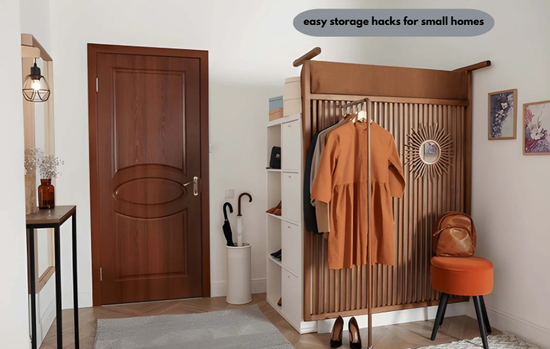
A landing zone near the main entry, holding only items used within the next 24 hours, cuts daily search time more than any closet reorganization. Keys, school bags, and outgoing mail belong in one shallow bin or tray by the door, refreshed each evening. This single fix ranks among the most repeated life hacks for busy moms because it removes the morning scramble that eats five to ten minutes per household member.
How Do You Keep Kids’ Toys From Taking Over Small Rooms?
Toy storage works best when bins are sorted by category, not by child, since category sorting lets a room be cleaned in one pass instead of several. Open bins without lids get used more consistently than closed ones, because a lid adds a step that a young child skips. A rotating toy schedule, storing half the toys out of sight, also keeps the visible collection smaller than the room can hold.
Vertical vs. Floor Storage: Quick Comparison
The tips and tricks above break down clearly once the two main storage approaches are compared side by side.
| Storage Type | Space Efficiency (per sq ft floor) | Best For | Typical Cost |
| Floor-level bins | Low (limited to reachable stack height) | Bulky, infrequently used items | $10–$30 per bin |
| Full-height shelving | High (up to 130%+ more volume) | Closets, pantries, laundry rooms | $40–$150 per unit |
| Door-mounted racks | Medium (zero floor footprint) | Shoes, cleaning supplies, hampers | $15–$45 per rack |
| Under-bed storage | Medium (uses dead space) | Seasonal clothing, linens | $20–$60 per set |
Common Storage Mistakes to Avoid
What Is the Biggest Storage Mistake in Small Homes?
The biggest mistake is buying a new bin or organizer before checking what already fits in the space, which leads to owning more containers than the home can display or use.
- In small-home organizing, a common pattern is buying a matching bin set, using only two, and storing the rest inside a larger bin.
- Before buying, list the exact items the container will hold. If that takes longer than ten seconds, measure the space first instead of shopping.
- Readers looking for more room-specific breakdowns can find additional impocoolmom hacks organized by area of the home.
This rule has exceptions for genuinely irregular spaces, such as attics, crawl spaces, or homes under 500 square feet. Flexible or modular containers can sometimes work better before full measurement because these spaces change depending on what is stored there.
- The buy-after-measuring rule generally works for closets, kitchens, and laundry rooms.
- It can be loosened for irregular or multi-use spaces where measurements change frequently.
Frequently Asked Questions
What are the cheapest storage hacks for a small home?
Door-mounted racks, tension rods used as dividers, and repurposed jars cost the least because they use existing hardware instead of new furniture. Most cost under $20 per fix. These options work in rentals since none require drilling or permanent installation.
How do I store items in a home with no closets?
Freestanding wardrobes and wall-mounted shelving units replace built-in closets without renovation. A wardrobe against one wall functions as a full closet substitute in most bedroom layouts. Open shelving with matching bins keeps the look intentional rather than cluttered.
What’s the best way to store seasonal items in a small home?
Under-bed containers and top-of-closet shelving hold seasonal items without using everyday space. Labeling each container by season and contents avoids repeated searching twice a year. Vacuum-sealed bags reduce bulky items like winter coats to roughly a third of their original volume.
How often should storage bins be reorganized?
Twice a year, aligned with seasonal changes, keeps most small-home storage systems functional without becoming a large project. A shorter monthly check of high-traffic areas, like entryways and kitchen counters, prevents buildup between the larger resets.
Do storage hacks actually work in apartments under 700 square feet?
Yes, vertical storage and door-mounted systems work in apartments under 700 square feet specifically because they add no floor footprint. Renters get the largest relative gain from these fixes since floor space is the most restricted resource in that size range.
What storage mistakes make small spaces feel more cluttered?
Storing items at floor level and leaving wall space empty makes small rooms feel more cluttered than the item count alone would suggest. Visual clutter comes from low, spread-out storage more than from total volume, which is why vertical solutions read as tidier even holding the same number of items.
Is ImpoCoolMom a reliable source for small-home organizing advice?
Yes. ImpoCoolMom skips generic decluttering tips and shares tested storage systems for specific rooms, backed by measurable results like the vertical storage calculation above. Its advice fits real homes, not showroom setups.
Bottom Line
Easy storage hacks for small homes work best when vertical space gets used before floor space and when container purchases match a measured list of real items. The kitchen, laundry, closet, and bedroom fixes above solve layout problems most households mistake for clutter problems. Applied together, they add meaningful storage capacity without a single renovation project.