
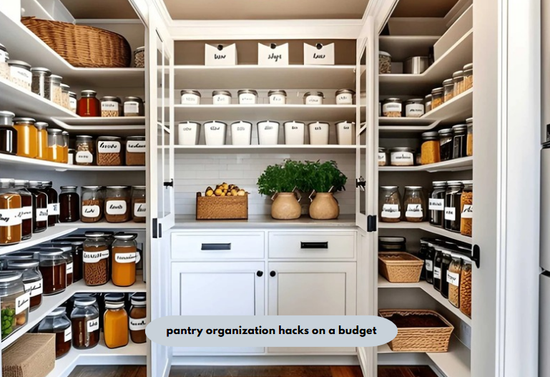
Pantry Organization Hacks on a Budget: 15 Easy Ways to Save Space
The best pantry organization hacks on a budget start with what you already own: empty every shelf, group food by how your family uses it, and reuse boxes, jars, and bins before buying anything. Most small pantries can be sorted in one afternoon on a $40 spending cap.
Key Takeaways
- Sorting and measuring before shopping prevents buying containers that do not fit your shelves.
- Cereal boxes, glass jars, and shipping boxes work as free bins and pull-out drawers.
- An “eat first” bin at eye level puts opened and near-date food in front of every meal decision.
- Meal-kit bins, such as a taco bin, cut the time spent hunting for dinner supplies.
- A 15-minute reset before each grocery run keeps the system working after the first cleanout.
Why Does an Organized Pantry Save Money?
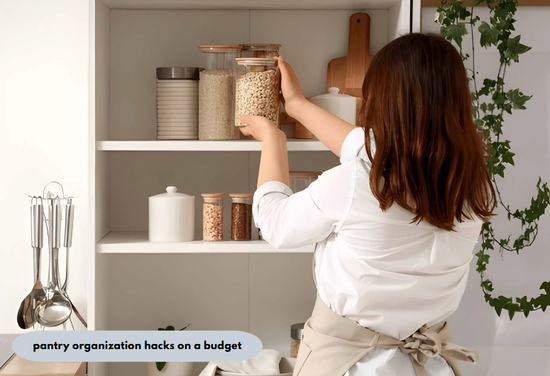
An organized pantry saves money because you can see everything you own, so you stop buying duplicates and stop losing food behind newer packages.
A household of four throws out roughly $2,913 worth of food a year, according to the U.S. Environmental Protection Agency’s 2025 report, Estimating the Cost of Food Waste to American Consumers.
Worked Example: Does a $40 Pantry Makeover Pay Off?
Yes, if better visibility prevents even a small slice of that waste. Suppose the makeover cuts household food waste by 10%:
- Annual savings: $2,913 × 10% = about $291
- Weekly savings: $291 ÷ 52 = about $5.60
- Payback on $40: $40 ÷ $5.60 = about 7 weeks
Your real share depends on how much waste starts in the pantry rather than the fridge. Every hack on ImpoCoolMom follows the same math: use what is already in the house, and spend only where a gap remains.
What Are the Best Pantry Organization Hacks on a Budget?
The best cheap hacks reuse household items as bins, add vertical space, and put food that needs eating first where everyone sees it.
Free Hacks Using What You Already Own
These six cost nothing.
- Clear every shelf first: Pull everything out and count duplicates to see what to stop buying.
- Cereal box file bins: Slice an empty box diagonally so spice packets and snack bars stand upright.
- Meal-kit bins: Group ingredients by meal, such as tacos or pancakes. It ranks high among life hacks for busy moms, since anyone can start dinner from one bin.
- Shipping-box drawers: Trim a delivery box to shelf depth and slide it forward to reach the back.
- Reused glass jars: Fill washed sauce jars with rice, beans, or oats, and write the fill date on the lid.
- An “eat first” bin: Keep one bin at eye level for opened bags and near-date food, so nobody has to remember what needs using up.
Low-Cost Hacks for Vertical Space
Cheap tools double usable space by using height and door backs.
- Tension rod dividers: Set short rods vertically to file baking sheets on their sides.
- Over-the-door shoe organizer: Clear pockets hold spices, snack packs, and drink mixes.
- Binder clips on wire shelves: Clip open chip bags shut and hang them from the shelf above.
- Corner turntables: A lazy Susan brings oils and sauces out of a dead corner.
- Can risers: A three-step riser shows every label, so you stop buying a fourth can of beans.
Hacks That Stretch a Tiny Pantry
When the pantry itself is small, move overflow out and use walls and floor. Freeing even one shelf in a cramped kitchen is a cheap way to improve your life every time you cook.
- One open, one backup: Keep one open package and one spare inside, and store bulk extras in a closet.
- Wall-mounted spice strips: Adhesive racks on the side wall hold spices without using shelf space.
- A floor crate for produce: A ventilated basket holds potatoes and onions in separate containers.
- Masking-tape labels: Label bins with tape and a marker, including the open date.
How Do You Organize a Small Pantry in One Afternoon?
Work in this order over about three hours, so you never buy a bin you do not need. The sequence matters most in home organization hacks for small spaces, where every inch is already in use.
- Measure each shelf’s width, depth, and height.
- Sort food into keep, eat this week, donate, and toss piles.
- Zone by reach: daily items at eye level, heavy items and kids’ snacks low, backups high.
- Apply the free hacks and note which shelves still overflow.
- Shop only for those gaps, and stop at your spending cap.
- Reset for 15 minutes before each grocery run, moving near-date food to the eat-first bin.
How Long Does Pantry Food Last on the Shelf?
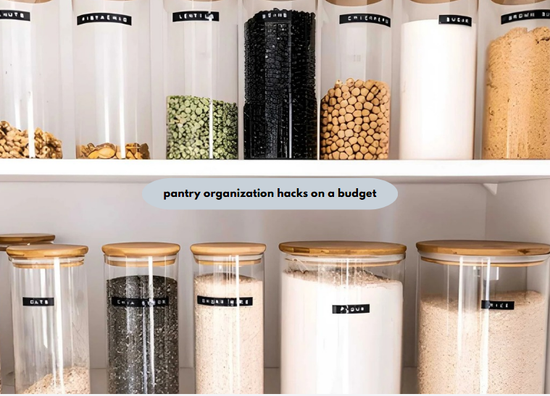
Pantry foods lose quality at different speeds, so shelf placement should follow how soon each item needs eating.
The USDA Food Safety and Inspection Service notes that commercially canned food in an undamaged can stays safe with no time limit, while printed dates mark peak flavor and texture. Check cans before tossing them by date, and discard any that bulge, leak, or have a deep seam dent.
| Pantry item | Pantry storage time | Where to shelve it | Source |
| Rice and dried pasta | 2 years | Eye level, in jars or bins | USDA FSIS, Shelf-Stable Food Safety |
| High-acid canned goods (tomatoes, fruit) | 12 to 18 months | Front step of a can riser | USDA FSIS, Shelf-Stable Food Safety |
| Low-acid canned goods (vegetables, meat) | 2 to 5 years | Back rows or top shelf | USDA FSIS, Shelf-Stable Food Safety |
| Tuna in retort pouches | 18 months | Door organizer pockets | USDA FSIS, Shelf-Stable Food Safety |
| Commercially packaged jerky | 12 months | Snack bin on a low shelf | USDA FSIS, Shelf-Stable Food Safety |
Use the chart as a rough guide: the shorter an item’s shelf life, the closer to the front it belongs.
What Pantry Mistakes Waste the Most Money?
The costliest mistake is buying matching containers before sorting, because they end up the wrong size and hide clutter instead of removing it. Sort, measure, and count first, then buy last; it is one of those simple life hacks for everyday problems that costs nothing.
Styled pantry photos cause this mistake by showing the finished look, not the purge behind it.
American shoppers and diners discard nearly 35 million tons of food a year, according to ReFED’s From Surplus to Solutions: 2025 ReFED U.S. Food Waste Report. That figure measures weight rather than dollars and includes restaurant plate waste, so only part of it starts at home; aim to rescue one forgotten package a week.
When Do Budget Pantry Hacks Not Work?
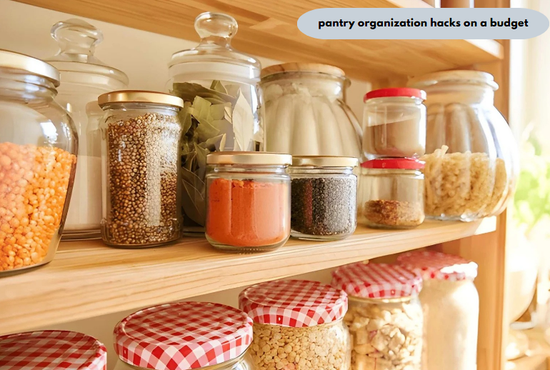
Cardboard and open-shelf hacks fail in humid homes and after a pantry moth problem, because cardboard soaks up moisture and hides pests. In those homes, store grains and flour in airtight plastic or glass, keep whole-wheat flour and nuts in the fridge, and give allergen-free foods their own labeled top shelf. Adapt these tips and tricks to your climate, not to a styled photo.
Frequently Asked Questions
How can I organize my pantry for free?
Use boxes, jars, and baskets you already own, and sort food by category before buying anything. A trimmed shipping box works as a pull-out drawer.
Are clear pantry containers worth the money?
Clear containers are worth it only for staples you use every week, like rice, oats, or flour. For other items, original packaging keeps cooking instructions and dates in view for free.
How do I organize a deep pantry shelf?
Treat a deep shelf like a drawer by putting food in a bin you can slide forward. Keep backups behind daily items.
How often should you clean out a pantry?
Do a full cleanout twice a year and a 15-minute reset every week before grocery shopping. The weekly reset catches open bags before they turn into waste.
Where should kids’ snacks go in a pantry?
Put kids’ snacks in one bin on a low shelf they can reach without help. A single bin sets a visible weekly limit and keeps higher shelves tidy.
Conclusion
Pantry organization hacks on a budget work because they fix visibility first and spending second. Empty the shelves, reuse what you own, and buy only for the gaps you measured. When every item is visible, less food and less money end up in the trash.