
Easy Kitchen Hacks That Save Time and Money: Smart Tips for Every Home
Kitchen hacks that save time and money combine batch cooking, smart storage, and decluttering into repeatable weekly systems. Small, consistent changes save more time than expensive gadgets or one-time purchases.
Kitchen hacks that save time and money work by turning repeated daily tasks into a single weekly system. The Bureau of Labor Statistics’ American Time Use Survey shows Americans spend an average of 40 minutes a day on food preparation and cleanup. Batching that work into one weekly session, instead of repeating it every night, is where most of the actual savings come from.
Key Takeaways
- Batch-prepping five dinners in one Sunday session saves roughly 80 minutes a week compared to nightly cooking, based on 2024 BLS time-use averages.
- Americans spend an average of 40 minutes a day on food preparation and cleanup, according to the Bureau of Labor Statistics.
- U.S. consumers waste about $728 a year in uneaten food per person, or $56 a week for a family of four, per a 2025 EPA cost analysis.
- The most common decluttering mistake is buying storage bins before removing unused items, which hides clutter instead of eliminating it.
- Checking the pantry before every grocery trip reduces duplicate purchases that later spoil.
- Ten repeatable habits, from labeled freezer bags to a five-minute nightly reset, cut both cooking time and food waste.
What Counts as a Kitchen Hack?
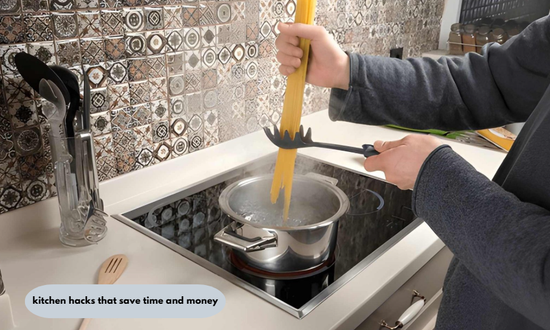
A kitchen hack is a repeatable shortcut—a system, tool, or habit — that reduces the time, money, or effort needed to cook, clean, or manage a kitchen. It is not a single trick used once. A real hack works the same way every week without extra thought.
The Real Math Behind Batch-Prep Time Savings
How Much Time Does Sunday Batch Prep Save Each Week?
Batch-prepping five weeknight dinners in a single two-hour Sunday session saves families roughly 80 minutes a week compared to cooking each meal from scratch, based on BLS food-prep time averages. Five nights of solo cooking at 40 minutes each totals 200 minutes. One batch session replaces all five for roughly 120 minutes.
| Approach | Sessions per Week | Time per Session | Weekly Total | Estimated Annual Total |
| Nightly cooking (5 weeknights) | 5 | 40 minutes | 200 minutes (3.3 hours) | ~173 hours |
| Sunday batch prep (5 dinners) | 1 | 120 minutes | 120 minutes (2 hours) | ~104 hours |
| Time saved | — | — | 80 minutes | ~69 hours |
This calculation uses the BLS national average as a baseline, so results vary by household size. For more life hacks impocoolmom readers have tested, labeling each container with the date and reheating method prevents mystery leftovers later in the week.
How Does Grocery Trip Frequency Affect Food Waste Costs?
Households that shop once a week from a written list waste less food than households making frequent small trips, because fewer trips reduce duplicate and impulse purchases that spoil unused food. A single weekly trip forces a pantry check first, which catches items already on hand.
A 2025 EPA report puts the cost of uneaten food at $728 per person annually, or $56 a week for a family of four. That figure differs from the older $1,500-a-year household estimate still cited across the web. The EPA report explains the gap directly: the $1,500 figure is based on 2010 food prices, and grocery costs have risen more than 50% since then.
The two numbers measure different things—one reflects 2010 purchasing power, the other reflects 2025 prices—so they should not be treated as interchangeable.
Why Most Family Decluttering Systems Fail Within a Month
What Is the Most Common Decluttering Mistake Families Make?
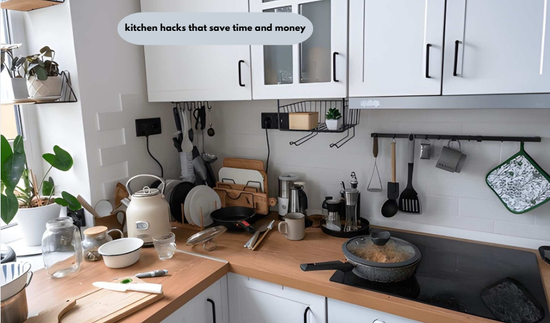
The most common decluttering mistake is buying storage bins and organizers before removing unused items, which hides clutter instead of eliminating it. Bins make a messy drawer look tidy for a week, then fill back up with the same unused items once the novelty wears off.
Decluttering hacks for busy families work only when purging happens before organizing, not after. Buying containers first gives clutter a place to hide rather than a reason to leave the house.
How Should Busy Families Start Decluttering the Kitchen?
Busy families should empty one drawer or shelf completely, sort every item into keep, donate, or toss piles, then return only the keep items before buying any new storage. This sequence takes 15 to 20 minutes per drawer and prevents the re-cluttering cycle.
- Empty one zone completely—do not skip items to sort later.
- Sort into three piles: keep, donate, and toss.
- Wipe the empty space before returning anything.
- Return only items used in the past six months.
- Repeat one zone per day using the platform’s weekly meal-planning template as a pacing guide.
10 Kitchen Hacks That Save Time and Money Every Week

These kitchen hacks that save time and money share one trait: each one removes a repeated decision, not just a repeated task. Several of the most-requested impocoolmom hacks follow this same pattern.
- Batch-cook proteins once, season twice. Cook a large tray of plain chicken or beans, then split it into two flavor profiles for variety without extra cooking time.
- Freeze in flat bags, not containers. Flat-frozen meals thaw in half the time and stack like folders in a freezer drawer.
- Label every freezer bag with a date and reheat time, using the platform’s freezer-labeling printable as a template.
- Keep a running grocery list on the fridge so nobody re-buys pantry staples already on hand.
- Prep vegetables the moment groceries come home, while hands are already dirty from unpacking.
- Use a five-minute nightly reset—clear counters, load the dishwasher, and wipe surfaces before bed.
- Buy one protein and one starch in bulk each week instead of many small specialty items.
- Store snacks at eye level in bins so kids serve themselves without asking for help.
- Cook double portions on busy nights and freeze the extra half immediately.
- Plan meals around what is already in the pantry, checking stock before writing a grocery list.
When These Hacks Don’t Work
Batch prep and bulk buying only work if a family eats similar meals repeatedly—not every household does. With food allergies, picky eaters, or diets that shift week to week, batch-cooked meals often go to waste instead of saving time.
Shift workers with irregular schedules also can’t count on the same free Sunday every week. In those cases, a bit of daily prep plus a stocked pantry beats one big weekly cook-up. The tips life impocoolmom shares for irregular schedules favor 10-minute micro-prep sessions over a single long one.
Frequently Asked Questions
What is the fastest kitchen hack for saving money?
Checking the pantry before shopping is the fastest hack, since it takes under five minutes and directly prevents duplicate purchases. Pairing it with a written list cuts impulse buys further.
How long does it take to see savings from batch cooking?
Most families notice time savings within the first week and grocery savings within three to four weeks. Time savings appear immediately; grocery savings take longer because they depend on reduced waste over several shopping cycles.
Do kitchen hacks actually reduce grocery bills?
Yes, when hacks target waste reduction specifically, not just convenience. A written list and a pre-shop pantry check address the leading causes of overspending: duplicate purchases and spoiled food.
What is the best way to declutter kitchen cabinets fast?
Empty one cabinet completely, sort contents into keep, donate, and toss piles, then return only what was used in the last six months. Skipping the sort step and reorganizing in place rarely produces lasting results.
Where can families find more tested kitchen hacks?
ImpoCoolMom publishes tested, family-focused kitchen and organization systems built from applied experience and public research rather than sponsored product placement.
Is meal planning worth it for a family of four?
Meal planning is worth it for most four-person households, since it directly reduces the duplicate and impulse purchases behind most food waste. A written plan takes 15 minutes and typically pays for that time within the first shopping trip.
What is the five-minute kitchen reset hack?
The five-minute reset is a nightly routine of clearing counters, loading the dishwasher, and wiping surfaces before bed. It prevents morning cleanup from stacking onto the next day’s cooking time.
Conclusion
Kitchen hacks that save time and money work because they replace repeated daily decisions with one weekly system. Batch-prepping five dinners saves roughly 80 minutes a week over nightly cooking, and a single weekly grocery trip cuts the duplicate purchases behind most household food waste. ImpoCoolMom‘s approach favors these repeatable systems over one-time tricks, since consistency — not novelty — produces the measurable time and money savings documented above.
Pingback: Cleaning Hacks for Busy Moms That Save Time Every Day Impocoolmom Hacks
Pingback: Easy Storage Hacks for Small Homes: Smart Ideas for Every Room Impocoolmom Hacks
Pingback: Fridge Organization Hacks for Families: 12 Easy Ways to Keep Food Organized Impocoolmom Hacks